Leadership


17
Jan 12

Arts Award

200 Year 7 watching, laughing and enjoying a Forest Forge and the Nuffield Theatre production of  ’The Phoenix and the Carpet.’

Join four children on their adventures as they are whisked away on their new magical carpet, with help of a mysterious phoenix!

The power of performance and one would expect for a number of our students, their first theatre performance. A real, live, 360 theatre performance. That much asked questions ’The purpose of education’ has for me, at least, been answered today.

As a teacher and school leader, today’s performance affirms my commitment to taking part in and experiencing live performances. I hope to add my classes viewpoint to authenticate this post.

qr code

20120117-123015.jpg

Popularity: 3% [?]


12
Dec 11

Work Life Balance

The work will wait while you show the child the rainbow, but the rainbow won’t wait while you finish your work. – Pat Clafford

qr code

Popularity: 16% [?]


29
Nov 11

Planning with Middle Leaders in Mind

Given a fairly positive first core day, I was giving ‘planning’ more consideration that I usually would on a Monday afternoon. Specifically, when and how you learn to plan effectively. So, given the NCSL materials and the commentary from Maggie Swinnerton, this is a document I hope to share and get feedback on, from the colleagues I work with in Curriculum areas. Feel free to add, comment and reuse.

We often plan change with ready made planning steps. Not unlike those presented below (adapted from the NCSL Middle Leaders materials). More recently I have began to consider that we often overlook or anticipate the ‘change impact’ on you, the change agent.

Good Planning

  • Objectives
  • Actions
  • Responsibilities
  • Timescales
  • Resources
  • Measureable success criteria
  • Monitoring, evaluating and next steps
  • Review dates

Testing the Planning

Most plans fail because they are never tried or are implemented without any thought as to what might go wrong; Consider therefore;

  • What things might get in the way
  • What are the worst case scenarios
  • What you have ‘going for you’
  • Prioritises
  • Be realistic in your time expectations

Monitor, Evaluate, Review

  • Step back regularly and reflect on progress
  • Select a small number of key success indicators
  • Collect hard results and soft evidence (views, formal feedback)
  • Weigh the evidence and, if need be, carry out improvements

Remember your Vision

Your vision is not static, evolving with practice. When we change, we learn, how can that change process be included, or at least highlighted, as part of the implementation of the plan.

Clearly define the impact you are aiming to achieve. The evidence you aim to collect and evaluation processes.

The impact on the staff you are working with (both teaching and non-teaching) on students, parents, guardians and carers, the community, the governors.

Note to self; consider and reflect the impact implementing the plan will have on you, the change agent.

qr code

Popularity: 9% [?]


28
Nov 11

Leadership Pathways Core Day 1

The day started early. iO have kindly decided to support Interactive Fiction platform Quest and together with Andy Goff and Alex Warren we are hurriedly drafting an introduction competition for teachers and educator with some fantastic prizes. More of that later…. A short drive to the De Vere Grand Harbour for Core Day 1 ‘Taking First Steps’ of the Leadership Pathways programme. A warm welcome from Maggie Swinnerton, coffee and pastries and of course the usual house keeping notifications. Why ‘Leadership Pathways.’ So far its been a remote experience, a 360 diagnostic, a brief coaching conversation with our Principal and the first of many online learning units. (Knowing that our Principal is fully supportive and committed to the coaching process). From the NCSL’s point of view, the clear emphasis is on being an ‘effective self-directed learner’ and ‘leader.’

Expectations

  • Next steps
  • Inspiration (inspiring others)
  • Recognition
  • ‘Do we like Senior Leadership?’
  • Networking and x phase, x subject, x setting
  • Time for conversation with SLT
  • Time for reflection and self-change

Concerns

  • Time pressure / WLB

An overview of the course, the year on Leadership Pathways, and conversation around the school impact study followed. Listening to our Primary colleagues, the size of the school, the infrastructure would appear more readily positioned to promote whole school impact, from ’International Partnerships,’ to numerous whole-school subject focused programmes, eg literacy and numeracy. Our Secondary colleagues appear to be more hemmed in by their subject commitments and the perception of the size of the task – in particular the perception of the size of the task in secondary schools.

After a short coffee break, we were back to the task of defining the conditions for effective self-directed learning.

  • Modelling
  • OMG moments
  • Self awareness
  • Time for reflection
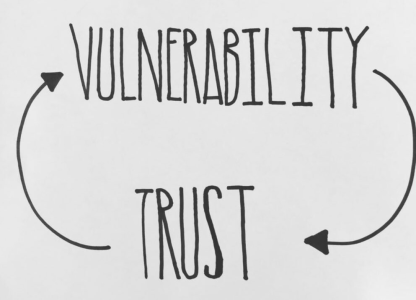
  • Security and trust
  • Honesty
  • Opportunities to try things out
  • Rescuing – disaster or crisis management
  • Resilience
  • Underpinning theory

This list led to an introduction to Boyatzis – Intentional Change Theory, a critical segway to uncovering one’s motivations for this process or course.

Intentional change is hard work and often fails because of lack of sufficient drive and the proper intrinsic motivation for it. This model of the Ideal self creates a comprehensive context within which a person (or at other fractals, a group or system) can formulate why they want to adapt, evolve, or maintain their current desired state.

This was the broker to the first set of philosophical, leadership questions as we attempt to define our moral purpose.

Who do I want to be?

Interestingly, my ‘who’ is first and foremost role of husband, father and friend. That aside, in the workplace I aim to demonstrate

As a teacher – to challenge and inspire young people, to role model a love of learning, to encourage and value risk-taking and the resilience to manage failure, to demonstrate a level of consistency that enables students to accurately describe me

As a leader – to demonstrate integrity, decisiveness, an analytical ability, approachable, imaginative, a willingness to give of oneself, an ability to face adversity, to evolve from a ‘doer’ to an ‘empowerer’, to demonstrate a level of consistency that enables staff to accurately describe me (a might need to manage the order, and accept that the order will change.)

That’s sufficient self reflection for now thought the importance of that task is to measure the distance between my ideal self and my real self?

qr code

Popularity: 4% [?]


28
Nov 11

Revisiting the Coaching Process

After a very pleasant lunch we reviewed the coaching process.

Coaching – Helping someone to find ‘answers’ for themselves.

Alternatively, a more refined definition is provided by the NCSL. Certainly, its never a bad thing to review this highly valuable strategy.

Coaching is about unlocking potential in order to maximise performance – it’s about bringing out the best in people. – NCSL

There is a range of documents and support materials on coaching and mentoring @ the NCSL website if you are interested.

The groups outline I felt was worth sharing with a number of delegates sharing poignant comments.

Responsibilities of the Coach

  • Quality time in an appropriate environment
  • Characteristics
  • Coaching – active listeners (non-verbal feedback, affirmation)
  • Equitable relationships
  • Boundaries
  • Confidential
  • 2 way traffic, learning together
  • Trust and honesty
  • Asking the right question
  • Stretch and challenge – ‘What other ways could you address that issue.’
  • Permit mistakes
  • Non-judgemental


Responsibilities of the Participant

  • Active participation
  • Preparation
  • Agenda
  • Accept the opportunity to ‘park’ what came before the meeting
  • Allow yourself to be coached

Now time to prepare for the Coaching processes as outlined in the course.

qr code

Popularity: 6% [?]